Short answer
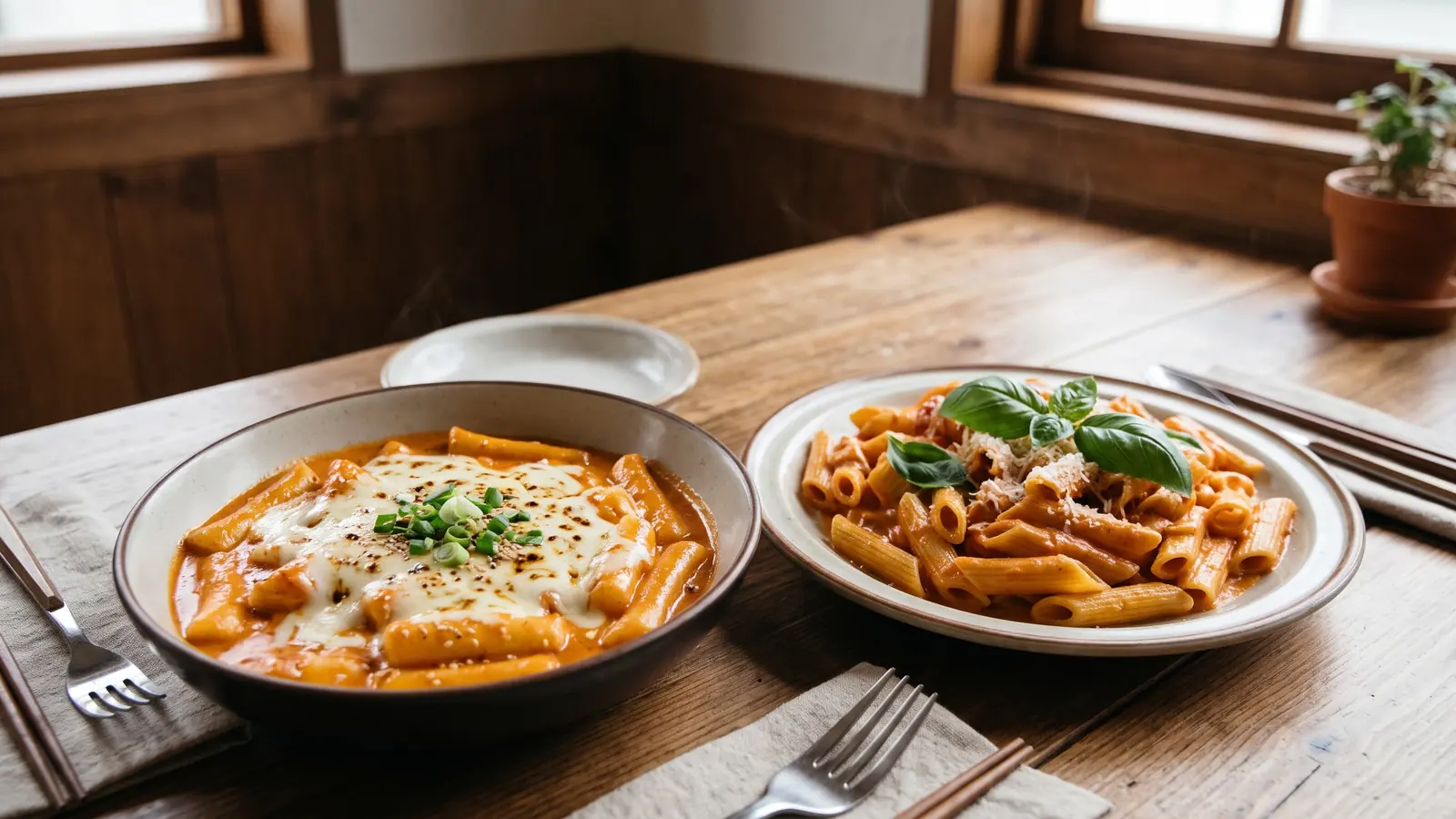
Rose tteokbokki is a Korean rice cake dish in a pink, creamy sauce made by blending gochujang chili paste with milk or cream. It is milder and richer than classic red tteokbokki, and the rice cakes stay soft and chewy.
Rose tteokbokki is a Korean rice cake dish served in a pink, creamy sauce made by blending gochujang (fermented chili paste) with milk or cream. The sauce is milder and richer than classic red tteokbokki, and the cylinder-shaped rice cakes stay soft and chewy, much like gnocchi in texture.
What is rose tteokbokki?
Rose tteokbokki is a modern variation of tteokbokki, the Korean street food of simmered rice cakes, in which the usual red sauce is softened with cream or milk until it turns pink. The name comes from the colour, not from any rose flavour.
Classic tteokbokki (also spelled topokki, ddukbokki or tteok-bokki) is rice cakes simmered in a sauce of gochujang, gochugaru (Korean chili flakes), sugar and stock, often with fish cakes and scallions. Rose tteokbokki keeps the same rice cakes but adds dairy. The result is a thicker, glossier sauce that clings to the rice cakes and tastes closer to a creamy pasta sauce than to a spicy street snack.
Why is it called rose tteokbokki?
It is called rose tteokbokki because the sauce has the pale pink shade of a rose sauce. The word “rose” here is borrowed from Italian-style cooking, where tomato sauce plus cream is called rose (or rosé) sauce.
Korean cooks adopted the term for sauces that mix gochujang with cream. Some cafes and instant-noodle brands in Korea use “rose” on packaging for the same pink, creamy style. There is no single authoritative recipe, so the exact balance of chili paste, cream and extras changes between kitchens.
How is rose tteokbokki different from regular tteokbokki?
The main difference is the sauce: regular tteokbokki is brothy, red and sharply spicy, while rose tteokbokki is creamy, pink and gentler. The rice cakes themselves are identical.
| Feature | Classic red tteokbokki | Rose tteokbokki |
|---|---|---|
| Sauce base | Gochujang, gochugaru, stock | Gochujang, cream or milk, sometimes stock |
| Colour | Bright red-orange | Pale pink to salmon |
| Texture of sauce | Thin, glossy | Thick, velvety |
| Heat | Medium to hot | Mild to medium |
| Common extras | Fish cakes, boiled egg, scallions | Cheese, shrimp, noodles, scallions |
| Eaten as | Snack or shared plate | Snack, meal or shared plate |
Both versions share the same rice cakes, called garaetteok when cut into cylinders, so someone who likes the chew of one will usually like the other.
What does rose tteokbokki taste like?
Rose tteokbokki tastes mildly spicy, savoury and slightly sweet, with the creaminess of a pasta sauce and the deep, fermented flavour of gochujang underneath. The rice cakes are bouncy and dense rather than crisp.
The sauce usually carries sweetness from sugar, saltiness from soy sauce or stock and a gentle chili warmth. Because cream coats the tongue, the heat feels rounder and lingers less than in a red sauce. Cheese on top, a common add-on, makes the dish richer still.
How do you make rose tteokbokki at home?
You make rose tteokbokki by simmering rice cakes in a gochujang sauce, then stirring in cream or milk at the end so it does not split. The whole dish takes about 20 minutes.
Ingredients for two portions:
- 300 g cylinder rice cakes (fresh, refrigerated or soaked frozen)
- 250 ml water or light stock
- 1 tablespoon gochujang
- 1 teaspoon gochugaru, optional
- 1 teaspoon soy sauce
- 1 teaspoon sugar
- 120 ml cream or whole milk
- 1 clove garlic, minced
- Sliced scallion, mozzarella or sesame seeds to finish
Steps:
- Soak firm or frozen rice cakes in warm water for 10 minutes, then drain.
- Simmer the water, gochujang, garlic, soy sauce and sugar for 3 minutes.
- Add the rice cakes and cook on medium for 5 to 8 minutes, stirring often because rice cakes stick.
- Lower the heat and pour in the cream or milk. Stir until the sauce turns pink and coats the rice cakes.
- Finish with scallion, sesame seeds or a handful of melted mozzarella.
Keep the heat gentle after adding dairy. A hard boil can make the sauce grainy.
What are the rice cakes in rose tteokbokki made of?
The rice cakes in rose tteokbokki are made from rice flour and water, steamed and pounded into a smooth dough, then cut into cylinders. This type is called garaetteok, and it is the standard tteokbokki shape.
Fresh rice cakes are soft and slightly sticky, while refrigerated and frozen ones are firmer and need a soak. Cooked correctly, the rice cakes are dense and springy, with a chew that is often compared with fresh gnocchi or mochi. Some cafes use thinner sliced ovals, which cook faster and absorb more sauce. Rice cakes made from wheat flour also exist in Korea, and some stores sell them, so anyone avoiding wheat should read the label.
What gives the sauce its pink colour and flavour?
The pink colour comes from gochujang and gochugaru mixed with a white dairy base, and the flavour comes from the fermented chili paste, sugar, garlic and the cream itself.
Gochujang is a thick paste of chili, glutinous rice, fermented soybeans and salt. It is sweet, salty and deeply savoury before any heat arrives. Adding cream lightens the red to blush pink and rounds off the bite. A pinch of sugar and a little soy sauce deepen the taste, and garlic gives it a savoury base. Some home cooks also stir in a spoonful of tomato paste or ketchup to push the colour closer to pink and add acidity, though this varies.
What goes well with rose tteokbokki?
Rose tteokbokki goes well with fried or boiled eggs, fish cakes, shrimp, scallions and a mild side such as pickled radish. Crisp or acidic sides cut through the richness of the cream sauce.
- Cheese: mozzarella or cheddar melted on top.
- Protein: boiled egg, shrimp, chicken or fish cakes.
- Noodles: some cooks add ramyeon noodles to make a heartier dish.
- Fresh sides: pickled radish, cucumber or a green salad.
Plain water or tea works well alongside, because the sauce is rich.
Is rose tteokbokki on the Cafe Ricotta menu?
Yes, Rose Tteokbokki appears on the delivery listing for Cafe Ricotta, a cafe at 4563 North Rd Unit 6 in Burnaby, BC, listed as rice cakes in a creamy rose-style sauce. The cafe also lists Cheese Tteokbokki and Mala Cream Tteokbokki, so all three creamy styles are seen on its listings as read on 14 November 2026.
This guide is independent and not the cafe’s website. The spice level, portion size, toppings and any extra ingredients of the cafe’s rose tteokbokki are not stated in the sources read, so ask the cafe or check the current listing before ordering. The recorded dishes are on the menu page, and the opening times are on the hours and location page.
How do you reheat leftover rose tteokbokki?
Reheat rose tteokbokki gently in a pan with a splash of milk or water, stirring until hot. Rice cakes harden in the fridge, so they need moisture and slow heat to soften again.
Avoid the microwave on full power, which can leave the centres cold and the outsides rubbery. Cover the dish and heat in short bursts if a microwave is the only option, stirring between each. Eat leftovers within a day or two and keep them refrigerated.
Common questions
Is rose tteokbokki spicy?
It is usually milder than classic tteokbokki because cream softens the gochujang. The heat depends on how much chili paste and chili flakes the cook adds, so spice level varies from one kitchen to the next.
What does rose mean in rose tteokbokki?
Rose refers to the pink colour of the sauce, the same idea as rose sauce in Italian-style cooking. Red chili paste mixed with cream or milk turns a pale blush pink, with no rose flavouring involved.
Can you make rose tteokbokki without cream?
Yes. Many cooks use whole milk, evaporated milk or a mix of milk and a little butter. The sauce is thinner and less rich, but still turns pink and tastes creamy.
How long do rice cakes take to cook?
Fresh or refrigerated rice cakes soften in about 5 to 8 minutes in simmering sauce. Frozen ones need a short soak in warm water first, then a similar simmer until chewy all the way through.
Are tteokbokki rice cakes gluten-free?
Traditional rice cakes are made from rice flour and water, so they usually do not contain wheat. Sauces and fish cakes often do, so the cafe or the package label is the place to confirm.
Planning a visit? Start with Cafe Ricotta: address, opening hours, menu and directions in one place.
This article is general information from an independent guide, not from Cafe Ricotta itself. For the store’s current details see hours and location.