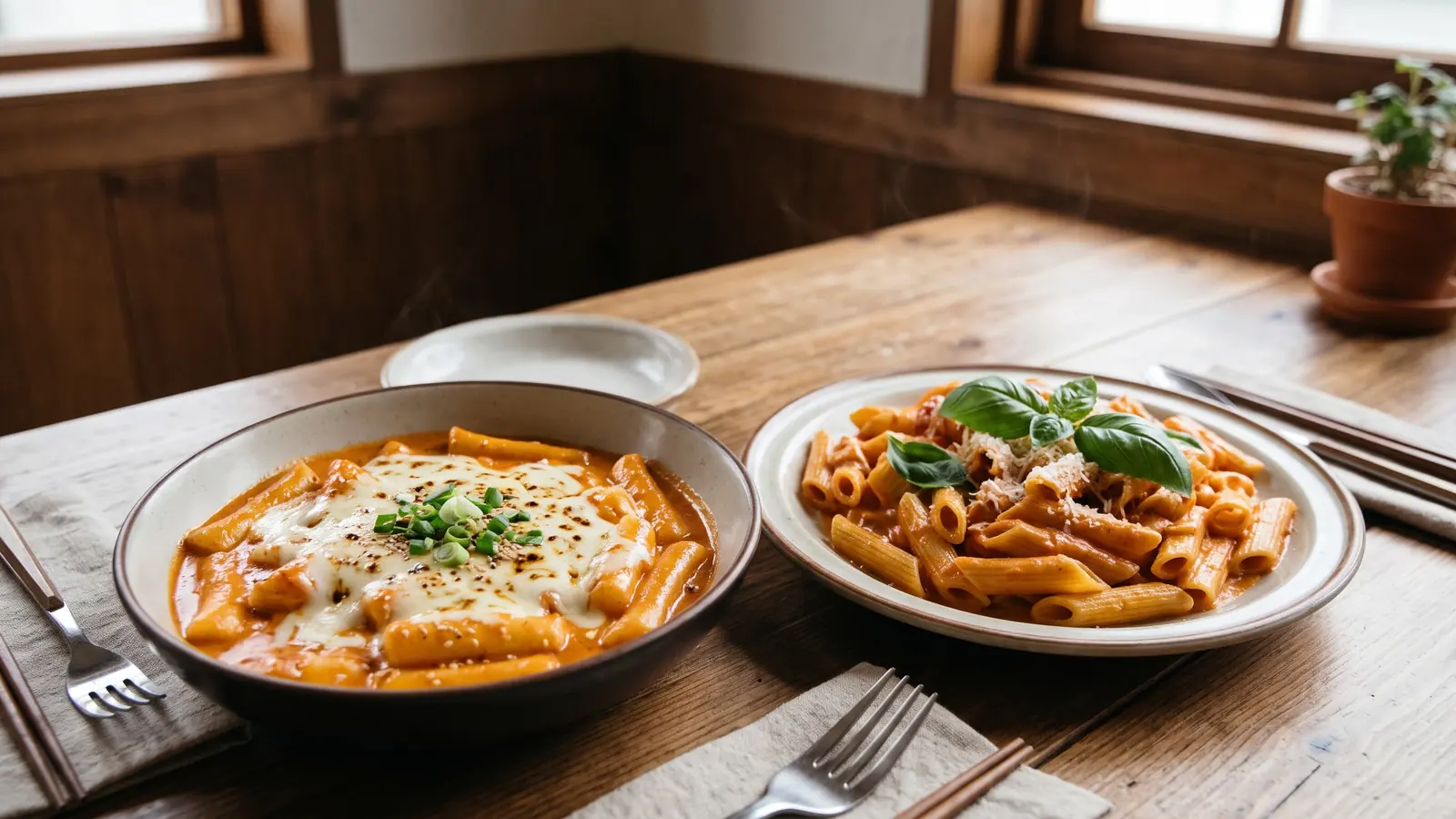
Short answer
Tteokbokki is pronounced roughly “tuk-BOH-kee” or “dduk-boh-kee”, with a tight, tense first sound and stress on the second syllable in English. It means stir-fried or simmered rice cakes, and menus spell it in several ways.
Tteokbokki pronunciation in English is roughly “tuk-BOH-kee”, with a tense, tight first sound written as a double t and a short, clipped second syllable. The Korean word means rice cakes (tteok) cooked in a pan (bokki), and menus also spell it topokki, ddukbokki or ddeokbokki.
How do you pronounce tteokbokki?
The standard way to say tteokbokki in English is “tuk-BOH-kee”, with the two syllables of tteok and bokki blended into three beats: tuk, boh, kee. A close approximation is understood by any server.
A simple guide:
- tteok sounds like “tuk” or “duk” (the vowel is like the “u” in “duck” but a little more rounded).
- bok sounds like “bohk” with a short o, close to “bock”.
- ki sounds like “kee”.
Say it as one smooth word with a slight stress on the middle beat: tuk-BOH-kee. Korean speakers do not stress syllables as heavily as English speakers do, so an even rhythm also works.
What does the double tt mean?
The double tt in tteokbokki marks a tense consonant, a sharper and tighter version of t, made with a firm tongue and no breath of air. Korean has three versions of this sound, and English has only one.
| Korean sound | Romanized | Rough English match |
|---|---|---|
| Plain, soft | t or d | a gentle t or d |
| Aspirated (puff of air) | th | the t in “top” |
| Tense | tt | a firm, tight d or t with no puff |
English speakers do not need to master the difference. Saying a clear, short “t” or “d” at the start is close enough, and tuk-boh-kee or duk-boh-kee are both understood.
What does tteokbokki mean?
Tteokbokki means rice cakes cooked in a pan, from tteok (rice cake) and bokki (stir-fried). The dish is chewy rice cakes simmered in a sauce, traditionally red and spicy with gochujang (fermented chili paste).
The name reflects older cooking. A royal court version was a soy-sauce stir-fry, and the red chili version popular today became widespread in the 20th century. Exact dates and origins are discussed by food historians, so be cautious of any very precise claims. Today, tteokbokki is among the most widely known Korean street snacks.
Why are there so many spellings?
There are many spellings of tteokbokki because Korean is written in hangul, and English versions are made by different romanization systems or by ear. All the spellings below refer to the same dish.
- tteokbokki: the spelling from the official Revised Romanization system.
- ddeokbokki and ddukbokki: common spellings that try to show the tense d sound.
- topokki: a common simplified form, often used on packaged products and some menus.
- tok-bokki and dukbokki: informal variants seen on signs.
On a search page, any of these can bring up the same recipes and menus. When ordering, read what is on the menu board, not what you think the spelling should be.
How do you say the related dish names?
Related dish names follow the same sound rules, so they are easy to pick up once tteokbokki is clear. Here are a few that appear near tteokbokki on Korean-style menus.
| Dish | Rough pronunciation | What it is |
|---|---|---|
| Gochujang | go-choo-jahng | Fermented chili paste |
| Gochugaru | go-choo-gah-roo | Korean chili flakes |
| Bulgogi | bool-GOH-gee | Marinated, thinly sliced beef |
| Eomuk | uh-muk | Fish cake |
| Rabokki | rah-BOH-kee | Tteokbokki with ramyeon noodles |
| Garaetteok | gah-reh-tuk | Cylinder rice cakes |
The word mala, seen on some creamy tteokbokki and pasta dishes, is Chinese in origin and is said “mah-lah”. It means numbing and spicy, from Sichuan peppercorns and chili.
What are tteokbokki rice cakes?
Tteokbokki rice cakes are chewy cylinders made from steamed, pounded rice flour, called garaetteok when cut to the tube shape. They are dense, bouncy and mild, and they absorb the sauce they cook in.
They are sold fresh, refrigerated or frozen, and need a short soak in warm water if they are firm. The cakes should be tender but still chewy when cooked, not mushy. Because the cakes themselves have little taste, the sauce carries most of the flavour.
How does tteokbokki appear on the Cafe Ricotta listings?
Cafe Ricotta in Burnaby, BC lists its Korean rice cake dishes as Cheese Tteokbokki, Rose Tteokbokki and Mala Cream Tteokbokki on its delivery listing, as read on 14 November 2026. Visitor reviews also mention tteokbokki.
Because those names use the double-t spelling, a person saying tuk-BOH-kee to a server will match the spelling on the menu. The sources do not say how hot or how large any of the dishes are, so ask the cafe for details. The recorded items are on the menu page, and opening times are on the hours and location page. This guide is independent and does not take orders.
What is the difference between tteokbokki and topokki?
There is no difference in the dish: tteokbokki and topokki are two spellings of the same Korean rice cake food. Tteokbokki follows the official romanization, and topokki is a looser, easier-to-read form.
Packaged foods and some restaurants prefer topokki because it looks simpler to non-Korean readers. Search results mix the two, so searching with either spelling finds recipes. Both spellings point to the pan-cooked rice cakes in chili sauce, and neither tells you anything about the sauce style or heat level. For that, read the rest of the menu line.
How do you describe the sauce when ordering?
Describe the sauce by its style: red and spicy, cheesy, creamy rose or mala cream. The sauce word matters more than the spelling of tteokbokki when choosing a dish.
- Red or classic: gochujang-based, sweet and spicy.
- Cheese: the red sauce with melted cheese on top.
- Rose: pink and creamy, with milk or cream mixed in.
- Mala cream: creamy, with a numbing, peppery heat.
If heat is a concern, ask the staff how spicy a version is before ordering. Spice levels differ between kitchens, and the same name can mean mild in one place and hot in another.
Does it matter if you pronounce it wrong?
No, it does not matter, because staff in Korean-style cafes hear many versions of the word and understand them. A clear attempt plus a finger on the menu item is enough.
Most food names travel between languages with shifted sounds, and Korean cooks are used to it. The goal is to be understood, and curiosity about the word usually gets a friendly response.
Common questions
Is the T in tteokbokki silent?
No. The double tt marks a tense consonant, a harder and tighter t sound with no puff of air. English speakers can say a firm d or t, so dduk and tuk both get understood.
Why are there so many spellings of tteokbokki?
Korean letters are converted to English by different systems and by guesswork. Tteokbokki follows official romanization, while topokki, ddukbokki and ddeokbokki are common informal forms on menus and packages.
What does tteok mean?
Tteok is the Korean word for rice cake, a broad category that includes chewy cylinders, sliced ovals, steamed cakes and sweet filled cakes. The same word begins many Korean dessert names.
What does bokki mean?
Bokki comes from bokkda, which means to stir-fry or pan-cook. Despite the name, modern tteokbokki is usually simmered in sauce rather than quickly stir-fried, but the original name stuck.
How do you say it when ordering?
Say tuk-BOK-ee clearly and point to the menu item if unsure. Staff in Korean-style cafes hear many versions, and a close attempt is almost always understood, especially with the dish name written down.
Everything practical is on the home page: Cafe Ricotta hours, menu and directions.
This article is general information from an independent guide, not from Cafe Ricotta itself. For the store’s current details see hours and location.